
Most Caribbean booking regret starts with one error: treating "the Caribbean" as a single beach trip. On a screen, a cliff suite in Saint Lucia, an all-inclusive in Jamaica, and a tower in Aruba look interchangeable. On the ground, they share almost nothing beyond warm air.
Pick on room rate alone and you can end up on dark volcanic sand when you wanted white coral flats, or paying $180 for dinners where you assumed food was cheap. Here is how the seven island groups on our Caribbean map compare.
Quick Answer: Which Caribbean Island Fits Your Trip?
Match your top priority to the island group built for it:
- Dominican Republic — best all-inclusive value and flights; summer east-coast sargassum.
- Jamaica — music, jerk food, waterfalls, and resorts; use pre-booked transfers.
- The Bahamas — fastest East Coast flights and clear cays; high food taxes, cooler Jan–Feb water.
- Aruba & Curaçao (ABC) — sunny, outside the hurricane belt, safe for dine-around nights.
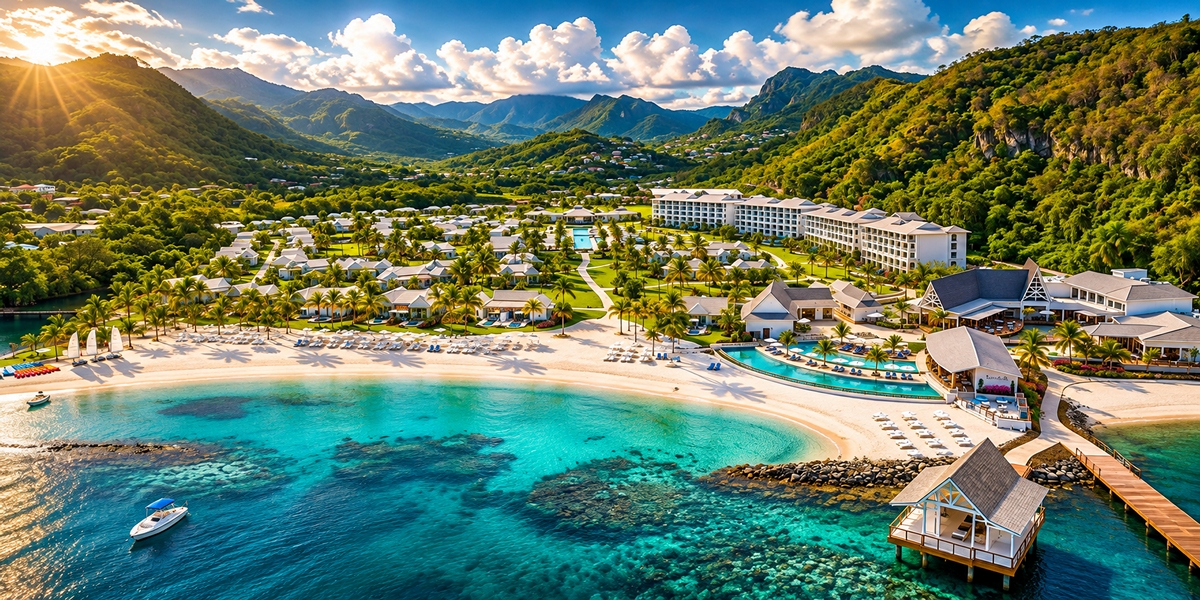
- Saint Lucia & Antigua — Piton peaks, cliff suites, and sailing bays; steep roads, luxury rates.
- Turks & Caicos — benchmark white sand and calm Grace Bay water; luxury dining costs.
- Puerto Rico & USVI — no U.S. passport required, Old San Juan, rainforest, easy ferries.
Compounds bundling meals, drinks, and beaches upfront at the strongest value.
Outside the storm belt with dry winds, clear west beaches, and safe dining.
Flat coral banks deliver electric-blue water, 1–3 hours from the East Coast.
Volcanic peaks, plunge pools, and harbors for couples prioritizing views.
Why "The Caribbean" Is Four Different Vacations
Geography and economics split the region along four fault lines:
In Punta Cana or Montego Bay, the resort is the trip. In Aruba, Curaçao, or San Juan, all-inclusive means paying twice while missing safe dining strips.
Flat coral islands (Turks and Caicos, Bahamas, Aruba) have zero rivers and neon-clear water. Volcanic islands (Saint Lucia) bring waterfalls and cliffs, but darker sand.
June–November puts northern and eastern islands inside the storm belt; the ABC islands sit near 12°N off Venezuela in dry sun.
PUJ, MBJ, NAS, SJU, AUA, and PLS handle daily mainline jets; smaller boutique cays require a regional hop or ferry.
Caribbean Islands Compared Side by Side (Decision Matrix)
How these 2026 costs are calculated: Ranges below reflect high- and shoulder-season averages (November–April, excluding Christmas/New Year peak week) for two adults sharing a 4-to-4.5-star beachfront or near-beach hotel before airfare (May–October rates run 20%–35% lower). On all-inclusive (AI) islands, Room / Night bundles meals, drinks, and taxes, while Spend / Day covers tips, taxis, and one excursion averaged daily; on room-only (EP) islands, Spend / Day covers meals, drinks, local transport, and mandatory 12%–27% taxes/service fees for two.
| Island Group | Format | Beach & Water | Storm & Seaweed | Flights & Transfer | Room / Night | Spend / Day | Avoid If… |
|---|---|---|---|---|---|---|---|
| Dominican Republic (PUJ / POP / LRM) |
Best AI Value Large resorts; 5 regions. |
Waves in Punta Cana; calm in Bayahibe. | Med–High Storm belt; east sargassum. |
Very Easy Direct to PUJ; 25 min ride. |
$220–$550 (AI) |
$30–$80 (tips/extras) |
You want a walkable town outside your gate. |
| Jamaica (MBJ / OCJ) |
Culture + AI Music, jerk food, falls. |
Calm 7-mile Negril sand; MBJ coves. | Medium Storm track; west clearer. |
Direct Negril/Ocho Rios 80 min drive. |
$260–$650 (AI) |
$40–$110 (tours/tips) |
You want unguided rental-car road trips. |
| The Bahamas (NAS / GGT) |
Quick Hop Nassau resorts; Out Islands. |
Clear banks; 72–75°F in Jan–Feb. | Medium Fall storms; low seaweed. |
Fastest 55 min from Miami; 2nd hop to cays. |
$320–$850+ (EP) |
$200–$350 (22%+ tax/fees) |
You want warm January water or cheap food. |
| Aruba & Curaçao (AUA / CUR) |
Fall / Dine-Out Safe Dutch islands; dining. |
Wide Aruba sand; Curaçao reef coves. | Lowest Risk Outside storm belt; clear bays. |
4–5 hr Direct from East US; 20 min ride. |
$280–$650 (EP) |
$150–$260 (meals/car) |
You want lush rainforests or waterfalls. |
| Saint Lucia & Antigua (UVF / ANU) |
Romance Pitons; 365 Antigua bays. |
White sand Antigua; volcanic St. Lucia. | Medium Wet Jul–Nov; west clearer. |
Long Drive UVF to north takes 75–90 min. |
$380–$1,100+ (EP/AI) |
$160–$300 (taxis/dining) |
You get carsick or want flat powder sand in St. Lucia. |
| Turks & Caicos (PLS) |
Beach Luxury Grace Bay condos/villas. |
Benchmark Sand 12+ miles behind barrier reef. |
Medium Aug–Oct storms; low weed. |
Easy Direct Nonstop to PLS; 15 min ride. |
$500–$1,300+ (EP) |
$220–$400 (22% tax/fee) |
You want historic towns, hikes, or budget dining. |
| Puerto Rico & USVI (SJU / STT) |
No Passport Old San Juan; St. John Park. |
San Juan surf; calm St. John bays. | Medium Aug–Oct peak; east seaweed. |
US Hub Direct to SJU; 20-min STT ferry. |
$240–$600 (EP) |
$140–$250 (U.S. dining) |
You want a wristband mega all-inclusive resort. |
For Dominican Republic value, our guide comparing Punta Cana, Bayahibe, Puerto Plata, and Samaná shows how to pick the right coast.
Cheapest Caribbean Islands to Visit (All-Inclusive Value): Dominican Republic vs. Jamaica
When travelers look for the cheapest Caribbean islands to visit without sacrificing beachfront comfort, the Dominican Republic and Jamaica win on total trip value. Per Dominican Republic Ministry of Tourism arrival data, landing at Punta Cana (PUJ) puts you in Bávaro or Cap Cana in 15–35 minutes, or 50 minutes west in Bayahibe for calm Caribbean water.
Jamaica brings distinct music, jerk cuisine, and mountain scenery. According to Visit Jamaica's official transport guide, Montego Bay (MBJ) offers 15-minute transfers, while reaching Negril's seven-mile beach or Ocho Rios (Dunn's River Falls) takes 75–100 minutes by road (use vetted taxis at night — see our Cancun vs. Jamaica guide or our full Jamaica travel guide).
Caribbean Islands with the Clearest Water: The Bahamas vs. Turks and Caicos
The Caribbean islands with the clearest water sit on the flat coral banks of the Lucayan Archipelago. What surprises visitors is winter water temperature: per Bahamas Ministry of Tourism climate data, Nassau ocean water dips to 72–75°F (22–24°C) in Jan–Feb. Nassau suits a 3–4 night East Coast hop, though Nassau Cruise Port can host 15,000+ daily visitors; fly on to Exuma for quiet cays (see our Cancun vs. Bahamas guide).
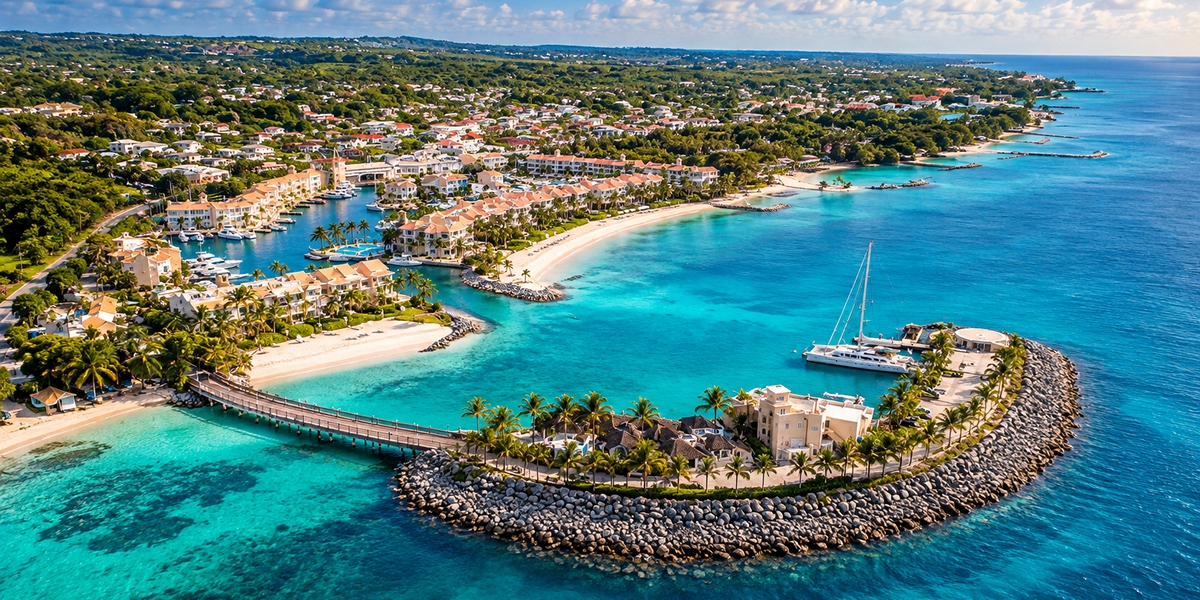
Turks and Caicos centers on Grace Bay on Providenciales, where an offshore reef creates 12 miles of calm, electric-turquoise water with no cruise port, dominated by luxury room-only condo-resorts.
Dominican Republic & Jamaica
Resorts cover meals, drinks, and activities upfront. Standout: Best cost control.
Turks & Caicos & Bahamas
Swimmers and East Coast flyers prioritizing water clarity. Standout: Brightest water.
Aruba & Curaçao (ABC)
Walk or drive nightly to local restaurants outside the storm belt. Standout: Fall reliability.
Saint Lucia, Antigua & Puerto Rico
Volcanic peaks, rainforest hikes, forts, and harbors. Standout: Strongest sense of place.
Best Caribbean Islands in Summer & for Couples: ABC Islands, Saint Lucia & U.S. Hubs
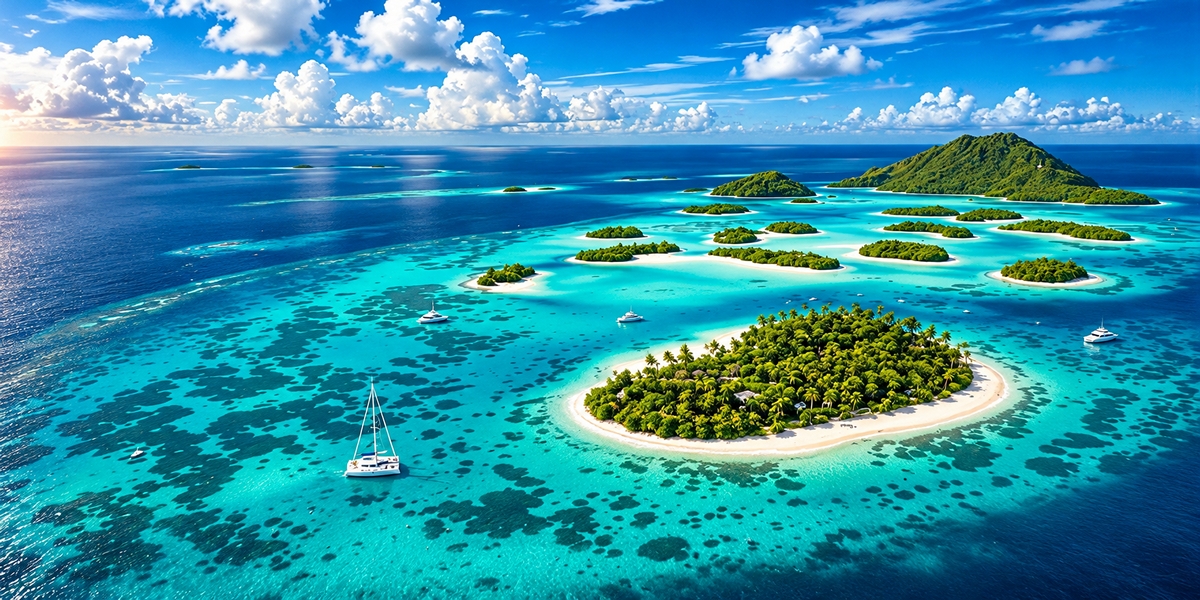
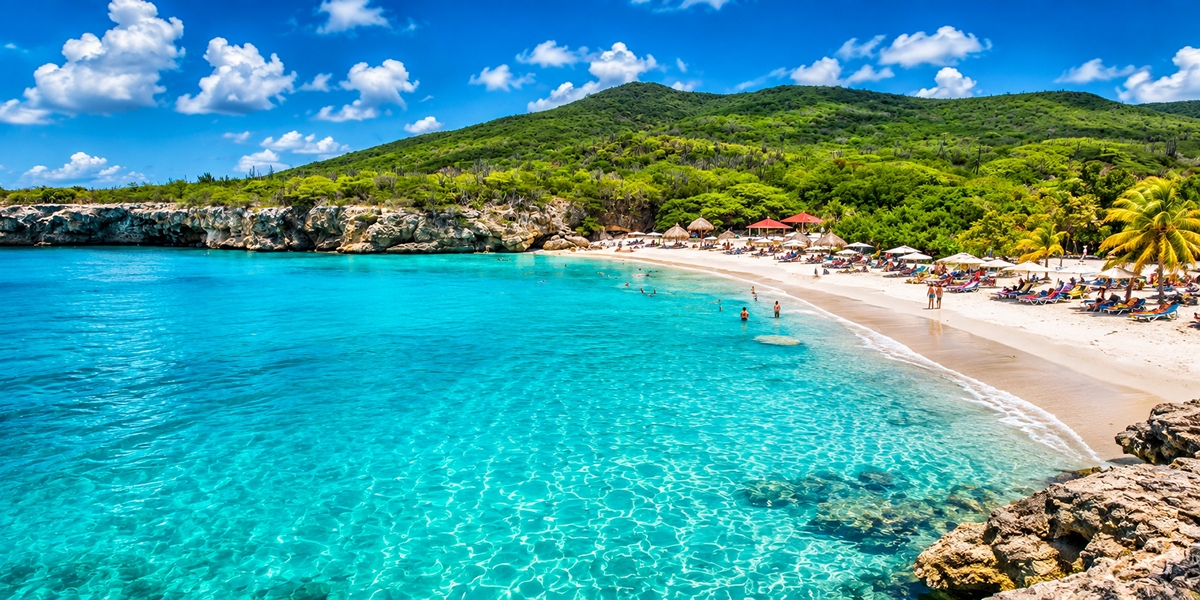
Aruba, Bonaire, and Curaçao (ABC) are the best Caribbean islands in summer and early fall, sitting in an arid belt off Venezuela outside the hurricane track: Aruba has wide sand on Eagle Beach and walkable dining; Curaçao pairs Willemstad with 35+ snorkeling coves; Bonaire focuses on shore diving (see our full ABC Islands travel guide).
Saint Lucia and Antigua rank among the best Caribbean islands for couples: Saint Lucia has the vertical Pitons, sulfur springs, and open-wall cliff suites, while flatter Antigua offers calm white-sand coves and English Harbour.
Puerto Rico and the USVI let U.S. citizens fly with a driver's license (REAL ID) and domestic cell plans, pairing Old San Juan and El Yunque with St. John's National Park bays.
Hurricane Belt, Sargassum Exposure, and Entry Rules
From May to November, check three filters: NOAA National Hurricane Center storm climatology (June 1–Nov 30, peaking Aug–Oct), USF Sargassum Watch System seaweed maps, and U.S. Department of State advisories.
When the Hurricane Belt Should Change Your Island (Aug–Oct)
- Best fall shelter: Aruba, Bonaire, and Curaçao sit near 12°N latitude, south of the main storm track.
- Higher autumn risk: The Bahamas, Turks and Caicos, Puerto Rico, USVI, Jamaica, and the DR sit inside the Aug–Oct belt; book refundable rates and storm coverage.
How Coast Orientation Controls Seaweed (Sargassum)
Sargassum rides trade winds onto east-facing shores (Punta Cana, eastern Puerto Rico). Leeward west- and north-facing beaches (Negril, Eagle Beach, western Curaçao, Bayahibe, Grace Bay) stay cleaner. Check our resort booking checklist first.
Passport Rules & Safety Advisory Nuances
Per U.S. Customs and Border Protection (CBP), U.S. citizens flying nonstop from the mainland to Puerto Rico or the USVI need no passport (BVI ferries do require one). Aruba and Curaçao suit rental cars; Jamaica (Level 3) and the DR (Level 2) suit pre-booked transfers. Checking broader visa-free beach options and entry rules beyond the Caribbean? See our visa-free beach destinations guide.
What Each Island Actually Costs (and the Room-Only Trap)
Small coral islands import nearly all food and liquor, adding 12%–27% in government occupancy taxes, VAT, and mandatory resort service charges (see Turks and Caicos and Bahamas Inland Revenue tax schedules) onto room-only ("European Plan" or EP) rates.
Worked Example — 7-Night Room-Only Illusion (2 Adults): A $380/night room-only hotel on Providenciales or Nassau plus 25% tax/service fees costs $475/night ($3,325/week). Add $45 breakfast, $65 lunch, $160 dinner, and $30 taxis ($300/day × 7 = $2,100) and the week hits $5,425. A $520/night all-inclusive in Punta Cana or Montego Bay ($3,640 with tax) plus $80 transfer and $250 tips totals $3,970 — saving $1,455. Before paying, run the rate through our Caribbean hotel booking checklist.
Flights, Transfers, and Why Island Hopping Rarely Works
Wide channels and north-south airline hubs make random island hopping slow and costly (for the four ferry and flight corridors that actually work, see our Caribbean island-hopping guide):
Common Mistakes When Choosing a Caribbean Island
Avoid these four planning mismatches before you pay a deposit:
Booking a room-only hotel on a luxury coral island to "save money." A $350 Turks and Caicos room isn't a deal once 25% taxes and $250/day food bills hit. Book an all-inclusive in the DR or Jamaica instead.
Booking all-inclusive on Aruba, Curaçao, or Puerto Rico. These islands have safe streets and great local dining; all-inclusive markups trap you in buffets.
Ignoring coast direction during seaweed season (May–Oct). West- and north-facing bays often stay clear on the same day an east-facing coast is covered.
Expecting flat white sand in Saint Lucia. Go to Saint Lucia for the Pitons, rainforests, and cliff pools. For miles of flat powder sand, book Grace Bay, Eagle Beach, or Negril.
Sources Checked
Sources checked November 17, 2026. Flight routes, taxes, sargassum, and advisories shift — verify entry rules and beach conditions close to departure.
How this guide was checked: We cross-checked NOAA hurricane climatology, USF sargassum tracking, U.S. CBP territory entry rules, U.S. State Department advisories, official island tourism transport guides (DR, Jamaica, Bahamas, Saint Lucia, USVI), and 2026 hotel tax and service-charge schedules.
Frequently Asked Questions
Which Caribbean island is best for a first-time visitor?
For an easy all-inclusive week with broad direct flights, start with the Dominican Republic (Punta Cana or Bayahibe). For safe dine-around nights outside the hurricane belt, choose Aruba. U.S. citizens without a passport should pick Puerto Rico or St. Thomas.
Is Aruba or Turks and Caicos better for a beach vacation?
Turks and Caicos wins on water clarity: Grace Bay sits behind a reef with calm, electric-blue water, though room and food bills are much higher. Aruba offers wide sand on Eagle Beach, sits south of the hurricane belt for June-to-November trips, and costs less.
Which Caribbean islands are safest from hurricanes and seaweed in summer and fall?
Aruba, Bonaire, and Curaçao (the ABC islands) sit near 12 degrees north off Venezuela, south of the main Atlantic hurricane track. Their west-facing beaches also face away from currents that push summer sargassum onto east-facing shores.
Is an all-inclusive resort worth it on every Caribbean island?
No. All-inclusive resorts make the most sense in the Dominican Republic and Jamaica, where compounds are built for self-contained stays. On Aruba, Curaçao, and Puerto Rico, booking a room-only hotel is smarter because safe local dining is a highlight.
Why is island hopping in the Caribbean harder than it looks on a map?
There is no region-wide ferry network, and airlines route most flights north-south through Miami or San Juan. Easy same-day ferry hopping only works inside clusters like St. Thomas to St. John and Tortola (USVI/BVI) or St. Maarten to Anguilla and St. Barts.
Decide how you want your days and bills to work before comparing hotels.
Choose the Dominican Republic or Jamaica for upfront all-inclusive value; Aruba or Curaçao for June–November trips and safe dine-around nights; Turks and Caicos or the Bahamas for electric-blue water and short East Coast flights; and Saint Lucia, Antigua, or Puerto Rico for volcanic views, harbors, or passport-free culture.