
For a lot of first-time visitors, the quiet worry about a Mexico trip isn't crime or hurricanes. It's the bathroom. The fear of losing two vacation days to a stomach bug is real enough that people google "can you drink the water in Cancun" before they book the flight, and the answers they find range from "you'll be fine" to "don't even brush your teeth with it."
The truth sits in between, and it's more useful than either extreme. Mexico is what health agencies call an intermediate-risk destination: a meaningful share of short-trip travelers get a mild bout of traveler's diarrhea, but the overwhelming majority eat, drink, and come home perfectly fine. The difference between those two groups is rarely luck. It's a handful of habits that take almost no effort once you know them.
This guide covers Cancun, Playa del Carmen, and Tulum specifically, where most readers are headed, and it's built to do one thing: let you relax and actually enjoy the food, while quietly avoiding the few things that genuinely cause problems. One rule underpins all of it — the water is the issue far more than the food.
Quick Answer: Is It Safe to Eat and Drink in Mexico?
Yes, with one hard line and a few soft ones. Don't drink the tap water — use sealed bottled water for drinking and brushing teeth. Beyond that, eat well: hot, freshly cooked food is your friend, big-resort ice is fine, and the real caution points are raw, room-temperature, and tap-washed items.
Drink sealed bottled water everywhere, including nice hotels. Use it for teeth too, and keep your mouth shut in the shower.
Anything that arrives steaming — grilled, fried, simmered — is the safest category, street stall or restaurant alike.
Fresh salsas, salads, pre-cut fruit, ceviche, and soft market cheeses are the usual culprits, not the tacos.
Can You Drink the Tap Water?
Short answer: no, and this applies everywhere in the region — Cancun's Hotel Zone, a five-star resort, a Playa condo, a Tulum eco-cabana. It's the single non-negotiable of the whole trip.
The part that surprises people is why even luxury hotels won't tell you to drink from the tap. Mexico's municipal water is often chlorinated and treated to a reasonable standard when it leaves the plant. The problem is everything between the plant and your glass: aging pipes, rooftop storage tanks (the black tinacos you see on every building), and intermittent pressure that can let contaminants back in. The water can be technically "treated" and still pick up trouble in the last hundred meters. That's why the rule is about the building, not the brand of resort.
The logistics are easy. Virtually every hotel leaves sealed bottles in the room and restocks them daily; all-inclusives have purified water on tap at every bar and restaurant. A large jug (garrafón) from any convenience store costs a couple of dollars if you're in a condo or Airbnb. One thing actually worth checking: that the seal on a bottle is intact. Refilling sealed-looking bottles with tap water is a known scam at the cheapest end of the market, so if a cap twists without that first click, don't drink it.
Ice, Drinks and the Fountain-Soda Trap
Ice causes more needless anxiety than anything else on a Mexico trip, usually because of advice that was written for backpacking through rural villages, not a week in the Hotel Zone.
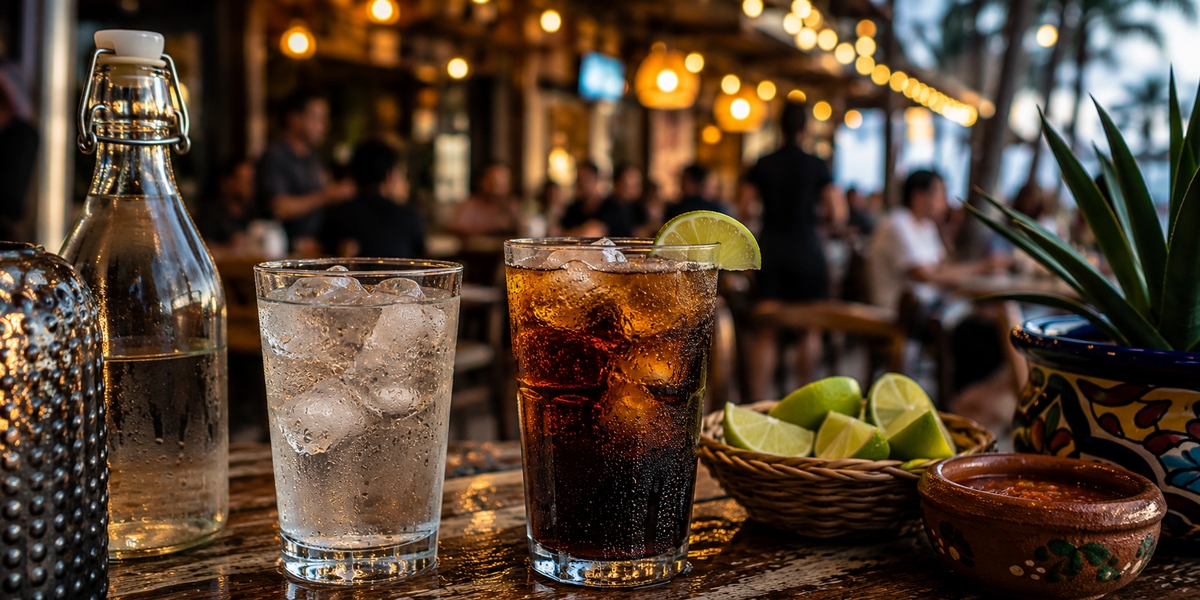
At resorts, established hotels, and tourist-area restaurants, ice is almost always commercial: made from purified water at a plant and delivered in bags, or produced by a machine fed from a filtered line. That's why millions of all-inclusive guests drink iced margaritas for a week with zero issues. The genuine risk is narrow — small, local, out-of-the-way places where ice might be homemade from tap water. There's even a visual tell worth knowing: factory ice is clear, uniform, and often hollow-cylinder or perfectly cubed, while cloudy, irregular, hand-cut ice is the kind to skip.
Everything served steaming hot is fine by definition: coffee, tea, broths. Beer, wine, and spirits are safe in the bottle, but note the thing people get wrong — alcohol does not sterilize the ice it's poured over. A contaminated ice cube in a strong drink is still a contaminated ice cube. When you're somewhere you can't vouch for, the move is simple: "sin hielo, por favor" — without ice.
Street Food, Restaurants and Resort Buffets
The instinct to treat street food as the villain and the resort buffet as the safe choice is backwards more often than you'd think. Risk doesn't track with how fancy a place looks. It tracks with two things: how hot the food is served, and how fast it moves. A taco stand mobbed with local office workers at lunch turns over its meat constantly and serves it off a screaming-hot griddle. A quiet hotel buffet with trays sitting under weak heat lamps for two hours is, on paper, the more dangerous option.
Resort & established restaurants
Purified water and ice, trained kitchens, high standards. If you're at an all-inclusive, you're already in the safest tier — the buffet's only weak spot is lukewarm food, not the food itself.
Busy street stalls
Follow the locals. A long line means fast turnover and fresh, hot food. Eat what's cooked in front of you; be choosier about raw toppings and pre-cut fruit that sit out.
The lukewarm middle
Half-empty restaurants, slow buffets, food held at room temperature. Bacteria multiply fastest between 40°F and 140°F — the "danger zone" that quiet kitchens drift into.
Careful eating isn't a force field, though. Travelers who follow every "boil it, cook it, peel it" rule still sometimes get sick — the biggest factors are the kitchen's own hygiene and the region's sanitation, neither of which you control. Good habits won't guarantee a healthy week, but they shift the odds heavily in your favor. That's why a low-cost travel insurance policy and a small medicine kit matter more than obsessing over a single salsa; the broader Cancun safety guide for families makes the same case for travelers with kids.
Eat This, Skip That: The Practical Map
This is the table to screenshot. It sorts the things you'll actually be offered in Cancun, Playa, and Tulum by real risk, and tells you the smart move rather than a flat "avoid." Use qualitative judgment, not paranoia: "higher risk" means be selective about where, not never.
| Food or drink | Risk level | Smart move |
|---|---|---|
| Sealed bottled water | Low | Your default for drinking and brushing teeth. Check the seal clicks. |
| Ice at resorts / tourist restaurants | Low | Drink it freely. Be cautious only at small, local, off-path spots. |
| Hot, freshly cooked food | Low | Your safest category anywhere. Steaming = good. Eat the tacos. |
| Fruit you peel yourself | Low | Bananas, oranges, mango you peel beat any pre-cut fruit cup. |
| Fountain soda / aguas frescas | Higher | Skip in small spots — it's tap water. Order bottled or canned. |
| Fresh salsas & raw condiments | Medium | Delicious and a common culprit. Fine at busy, reputable places. |
| Leafy salads & raw vegetables | Medium | Washed in tap water. Trust them at resorts, not roadside stalls. |
| Pre-cut fruit left out | Medium | The cutting board and the sitting-out time are the risk, not the fruit. |
| Ceviche & raw seafood | Higher | Citrus doesn't sterilize it. Enjoy only at well-reviewed places. |
| Unpasteurized soft cheese (queso fresco) | Higher | Skip the market/street version; fine in established kitchens. |
If you read only one row, make it the fountain-soda one — it's the trap that catches travelers who'd never touch tap water on purpose. For day trips away from the resort bubble, where you're more exposed to small local kitchens, it's worth a quick scan of this list before you go; the best day trips from Cancun often put you in exactly those village-and-ruins settings where the village taco stand, not the tour-bus rest stop, is the better bet.
How to Lower Your Risk Without Ruining the Trip
The goal isn't to eat in fear. It's to make a few choices automatic so you can stop thinking about it. Pack a tiny kit before you fly, build one or two habits on the ground, and you've handled 90% of the problem.
A small stomach kit
→ Bismuth subsalicylate (Pepto-Bismol), loperamide (Imodium), and oral rehydration salts. Cheap, light, and far easier to bring than to hunt for at 2 a.m.
Hot, fresh, and busy
→ When in doubt, choose food that's steaming, just-cooked, and from a place with turnover. This single filter removes most risk.
Bottled by default
→ Water and drinks bottled or canned; "sin hielo" anywhere you can't vouch for the ice. Carry a bottle so you never get caught thirsty.
Hands, then food
→ Hand sanitizer before eating, especially street food and beach days. A surprising share of "bad food" is actually hands, not the dish.
Pre-dose for high-risk days
→ Taken on a schedule, Pepto-Bismol meaningfully lowers your odds. Useful before a big street-food day — check interactions if you take blood thinners or are aspirin-sensitive.
Don't go zero-to-100
→ Your gut adjusts. Hitting spicy street food, raw ceviche, and mezcal all on night one is asking for it. Build up over a couple of days.
One more practical note that pays off: keep some cash in small bills. Pharmacies (farmacias) in Cancun, Playa, and Tulum are excellent, well-stocked, and often have a doctor on site for a few dollars, but the smaller ones and the corner store with the rehydration salts won't always take cards. The money in Mexico guide covers how much cash to carry and where pesos beat dollars.
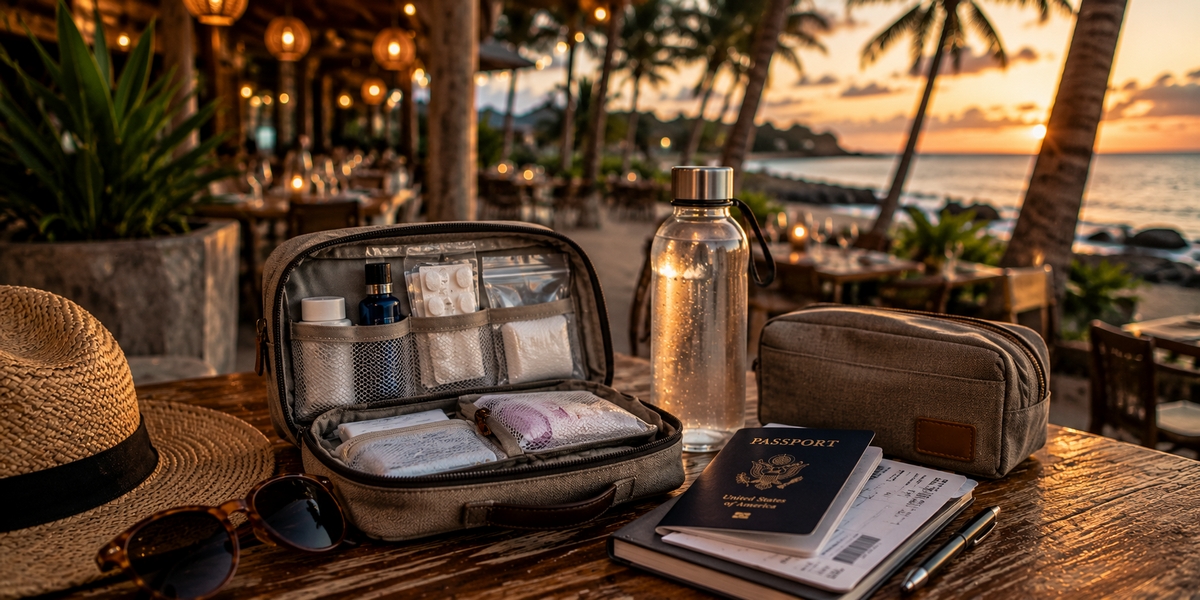
If You Get Sick: Treatment, Pharmacy and the Doctor Line
Plan for it even though it probably won't happen, because the worst time to figure out the plan is at 3 a.m. in a dark hotel room. The good news: the typical case is mild, self-limiting, and over in one to three days.
Rehydrate first, hard
Fluids are the whole game. Bottled water plus oral rehydration salts beats water alone, because you're losing salts, not just liquid. Sip constantly rather than gulping.
Treat the symptoms
Loperamide (Imodium) slows things down for a flight or a beach day; Pepto-Bismol settles the stomach. Use loperamide only if there's no fever and no blood.
Eat gently, rest
Plain rice, toast, bananas, broth. Skip alcohol, dairy, and heavy food until it passes. One quiet pool day usually does more than any pill.
Know the red lines
See a doctor for fever above 101°F, blood or black in the stool, severe pain, no fluids kept down for 24 hours, or symptoms past five days. Resort doctors and farmacia clinics are fast and cheap.
Mistakes Travelers Make
Most stomach trouble in the Riviera Maya isn't exotic. It's one of these small, repeatable slips.
The toothbrush glass of tap water. People nail the drinking-water rule, then rinse a toothbrush under the faucet on autopilot. Keep a bottle by the sink from day one.
The fountain soda. Refusing tap water all week, then ordering a fountain Coke or a fresh agua fresca made with it. Bottled or canned only when you can't vouch for the place.
Day-one overload. Spicy tacos, raw ceviche, and a night of mezcal within hours of landing. Even safe food can overwhelm a gut that just got off a plane. Ease in.
No kit, no plan. Hunting for rehydration salts while already sick, with no small bills for the farmacia. Pack the kit at home; it weighs nothing.
Sources Checked
Sources checked on June 5, 2026. Health guidance, risk levels, and medication advice can change, and nothing here replaces a doctor's or pharmacist's advice for your own situation — especially if you're pregnant, traveling with young children, or managing a chronic condition. Verify medication choices against your own health before you take them.
How this guide was checked: We compared current CDC traveler's-health guidance on Mexico, food and water precautions, and traveler's-diarrhea prevention and treatment, then translated it into the practical reality of Cancun, Playa del Carmen, and Tulum rather than a generic rural-travel scenario.
Frequently Asked Questions
Can you drink the tap water in Cancun, Playa del Carmen or Tulum?
Treat the tap water as not safe to drink anywhere in the region, including Cancun's Hotel Zone and high-end resorts. The issue is less the water leaving the treatment plant and more the old building pipes and rooftop storage tanks it passes through on the way to your faucet. Drink sealed bottled water, use it to brush your teeth, and keep your mouth closed in the shower. Most hotels leave bottled water in the room and refill it daily.
Is the ice safe in Mexican resorts and restaurants?
At large resorts, established hotels, and tourist-area restaurants, ice is almost always made from purified water and delivered as uniform machine cubes, which is why most all-inclusive guests drink it for a week with no problem. The real risk is small, local, off-the-path spots where ice could be homemade from tap water. A practical tell: factory ice is clean, hollow, and uniform, while cloudy or irregular cubes are worth skipping. If unsure, order drinks without ice.
Is street food in Mexico dangerous for tourists?
Not by default. A busy taco stand with a line of locals and high turnover, serving food that comes off the grill steaming hot, is often safer than a half-empty restaurant with food sitting under a warmer. The danger zone is lukewarm food, raw toppings, and things that have been sitting out. Follow the crowd, eat what's cooked hot in front of you, and be more cautious with raw salsas and pre-cut fruit than with the grilled meat itself.
What foods should I avoid to not get sick in Mexico?
The usual culprits are raw or undercooked items washed or prepared with tap water: fresh salsas and uncooked condiments, leafy salads and raw vegetables, pre-cut fruit, unpasteurized soft cheeses like queso fresco from markets, and raw seafood such as ceviche. Citrus does not actually sterilize ceviche, so "cooked in lime" is a myth. Hot, freshly cooked food and fruit you peel yourself are your safest categories.
What should I do if I get traveler's diarrhea in Mexico?
Most cases are mild and pass in one to three days. Rehydrate aggressively with bottled water and oral rehydration salts, rest, and use loperamide (Imodium) for short-term relief if there's no fever or blood. Bismuth subsalicylate (Pepto-Bismol) eases symptoms and, taken preventively, cuts risk by about half. See a doctor if you have a fever above 101°F, bloody or black stools, severe abdominal pain, can't keep fluids down for 24 hours, or symptoms lasting past five days.
Do I need to worry about food safety at an all-inclusive resort?
Much less than outside one, but not zero. Big resorts use purified water and ice and run their kitchens to international standards, which is why all-inclusive stays are the lowest-risk way to eat in Mexico. The weak point at a buffet is temperature: food sitting lukewarm in the danger zone between 40°F and 140°F. Choose dishes that are steaming hot or properly chilled, be selective at the salad bar, and you remove most of the remaining risk.
Bottom Line: The 60-Second Version
If you skip the whole article, keep these.
The honest rule for Mexico is narrow on purpose: never drink the tap water, and otherwise eat with confidence. The water is the real hazard; the food, handled with a little judgment, is one of the best reasons to come.
For most travelers, the winning move is to relax and eat well — choose hot, fresh, and busy, default to bottled drinks, and carry a small medicine kit you'll probably never open.
If your stomach is genuinely sensitive or you're traveling with small kids, lean toward the resort and established restaurants for the first couple of days, then branch out once you've found your footing.