
Egypt can be spectacular: pyramids at sunrise, Red Sea water that looks edited, temples that make normal buildings feel embarrassed, and hotel breakfasts that somehow involve twelve kinds of bread.
It can also be intense. In tourist areas, you may meet aggressive vendors, vague prices, "free" gifts, unofficial helpers, taxi drama and shop stops dressed up as culture.
This guide is not here to scare you away. It is here to make you boringly hard to pressure. Calm, polite, prepared, and not paying $70 to get off a camel you never really wanted to ride.
Quick Answer: How to Avoid Egypt Scams
Most tourist problems in Egypt begin the same way: unclear price, rushed decision, unofficial person, or pressure after the service has already started.
Taxi, camel, photo, guide, boat, souvenir, restaurant special. If the price is not clear before it starts, pause.
Tickets at official counters, tours from reviewed operators, taxis through apps or agreed prices, help from uniformed staff.
Small cash makes tips, taxis and quick purchases easier. It also prevents the classic "no change" performance.
A calm "La, shukran" or "No, thank you" works best when you do not stop to debate, explain or apologize for existing.
First: Egypt Is Not the Problem
Most Egyptians you meet will be normal, helpful people doing their jobs. The issue is concentrated around high-pressure tourist zones where visitors arrive tired, excited, under-informed and carrying cash.
Be friendly, not available
Smile if you want, but do not enter every conversation. A long conversation can become a sales funnel with monuments in the background.
One phrase helps
"La, shukran" means "No, thank you." Say it once, maybe twice, then move on.
Separate your cash
Keep small bills accessible and larger bills hidden. Do not pull out a full wallet in a crowd.
Move toward official space
If someone pressures you, head to a cashier, hotel desk, security point or tourist police area.
Pyramids and Attractions
The pyramids are extraordinary. The sales energy around them can also be Olympic-level. Your goal is to see ancient history, not accidentally hire three guides and a camel.
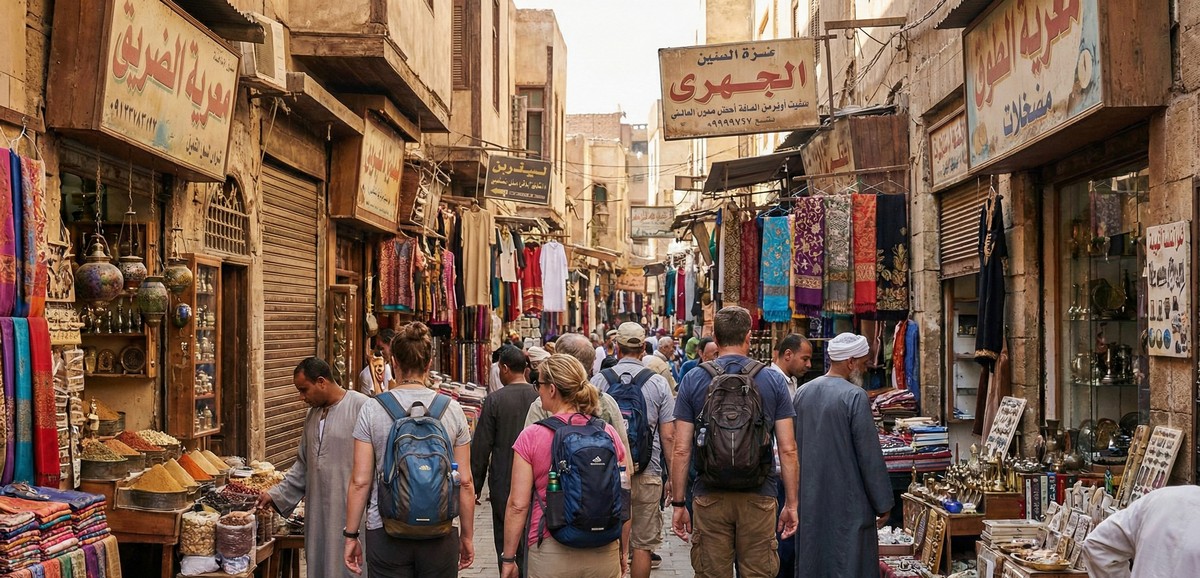
"One dollar" is not the final price. The photo or ride starts cheap, then the dismount, route or "service" becomes expensive.
"I show you secret place." The place is often public, and the "help" ends with a tip demand.
"Entrance is closed, come this way." Buy tickets only from official counters or official online systems where available.
Do not hand over your phone casually. A "better photo" can turn into a payment demand before your phone comes back.
Taxis, Transfers and Street Prices
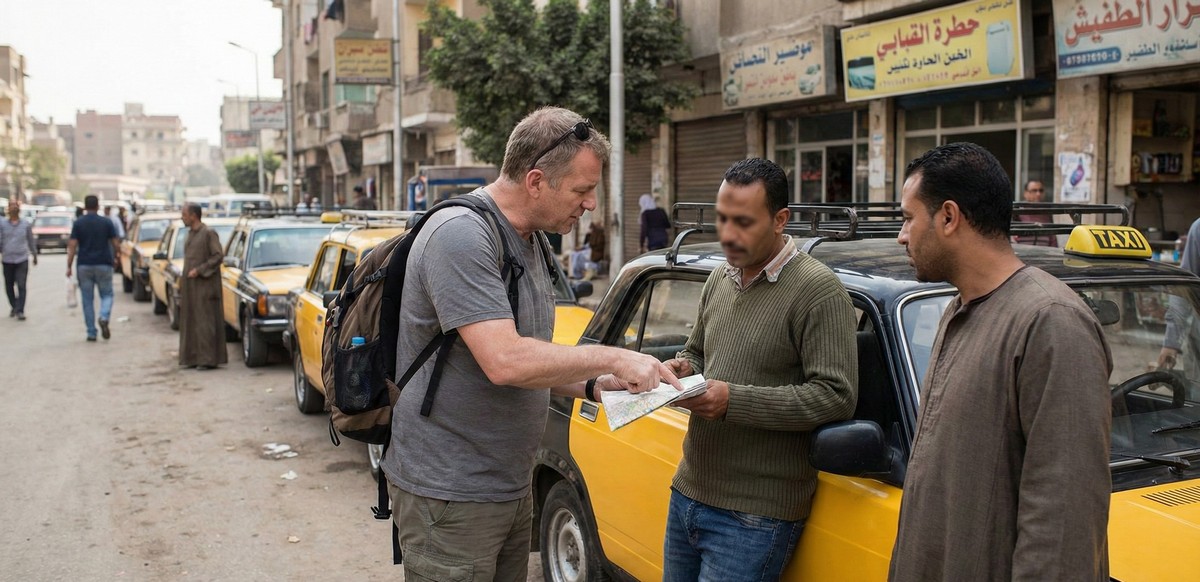
Taxi issues are less about danger and more about friction: no meter, unclear price, sudden extras, "no change," or a route that gets weirdly scenic.
| Situation | Red flag | Safer move |
|---|---|---|
| Street taxi | Price after ride The driver starts moving before a total is agreed. |
Agree total price before entering or use an app where available. |
| Airport transfer | Unofficial helper Someone grabs your bag or says your driver is unavailable. |
Use official desks, hotel transfers or confirmed pickup details. |
| Payment | No change You pay with a large bill and suddenly change disappears from the economy. |
Carry small notes and confirm currency before the ride. |
Say the total out loud
"Total 300 Egyptian pounds to the hotel, yes?" Simple, boring, useful.
Confirm the currency
Egyptian pounds, dollars and euros should not magically switch mid-ride.
Use your hotel when tired
After a late flight, paying a little more for a predictable transfer can be worth every pound.
Do not argue in the car
If pressure rises, end the ride in a public place or near hotel/security staff.
Tours, Shops and Souvenirs
Some cheap tours are cheap because the real business happens in papyrus shops, perfume rooms, alabaster "factories" and souvenir stops where everyone suddenly has a cousin with a discount.
Ask what is actually included
Entrance tickets, lunch, drinks, boat rides, guide, transfer, shop stops and time at the site should be clear before you pay.
Demonstration is not obligation
You can watch the papyrus or perfume presentation and still buy nothing. Your vacation is not a purchasing exam.
Paper does not prove value
Souvenir certificates can look impressive while proving very little. Compare prices before buying expensive items.
Restaurants, Bills and Extras
Most meals are fine. Problems usually come from unclear menus, "free" extras, seafood priced by weight, service charges or a handwritten bill with the emotional accuracy of abstract art.
No prices, no order. Especially for seafood, confirm price per portion or per weight before ordering.
Ask if bread, sauces, water and salads are included. If you did not order it, clarify immediately.
Request itemization. Check service charge, tax, extra plates and drinks before paying.
Look for pricing complaints. Repeated "bill was higher than expected" reviews are useful data.
Hotel and Resort Pressure
At resorts, the pressure can be softer: room upgrades, spa packages, hotel-only tours, "last chance" offers and confusion about what all-inclusive actually includes.
Keep screenshots
Room category, board type, included services, cancellation rules and transfer details should be saved offline.
Hotel desk is not always cheapest
Hotel tours may be convenient, but compare program, reviews and included costs before buying.
Ask for the exact benefit
Sea view, room size, building, floor, late checkout. "Better room" is not a category.
Ask what is excluded
Premium drinks, a la carte restaurants, minibar, beach activities and spa are often separate.
Safety Basics and Official Help
The goal is not to win every negotiation. The goal is to stay calm, keep control of your documents and money, and know where to go if pressure becomes harassment.
Anti-Scam Checklist
Tiny habits that make a big difference.
Frequently Asked Questions
Is Egypt safe for tourists?
Major tourist areas can be visited safely by many travelers, but you should follow current official travel advice, avoid restricted regions, use reputable operators and take normal precautions against scams and harassment.
What is the most common tourist scam in Egypt?
Unclear pricing is the root of many problems: camel rides, taxis, photos, unofficial guides, restaurant extras and souvenir shops. Agree on the final price first.
Should I use taxis in Egypt?
You can, but agree on the total fare before the ride or use reputable apps where available. Carry small bills and confirm the currency.
Can I photograph people and sites in Egypt?
Be careful. Official UK guidance says you should get permission before photographing people and avoid officials, military sites, government buildings and sensitive infrastructure.
What should I do if someone pressures me for money?
Do not argue in an isolated spot. Use a short refusal, keep moving, and head toward official staff, your hotel, a ticket office, security point or tourist police.
Egypt is not a place to avoid. It is a place to approach with clear prices, small bills, official tickets and a polite refusal ready in your pocket.
Most of the classic tourist scams are not complicated. They rely on speed, pressure and confusion. Slow the moment down, ask what is included, and walk away when the answer gets slippery.
Do that, and Egypt becomes what it should be: history, sea, food, desert light and stories you actually wanted to bring home.